
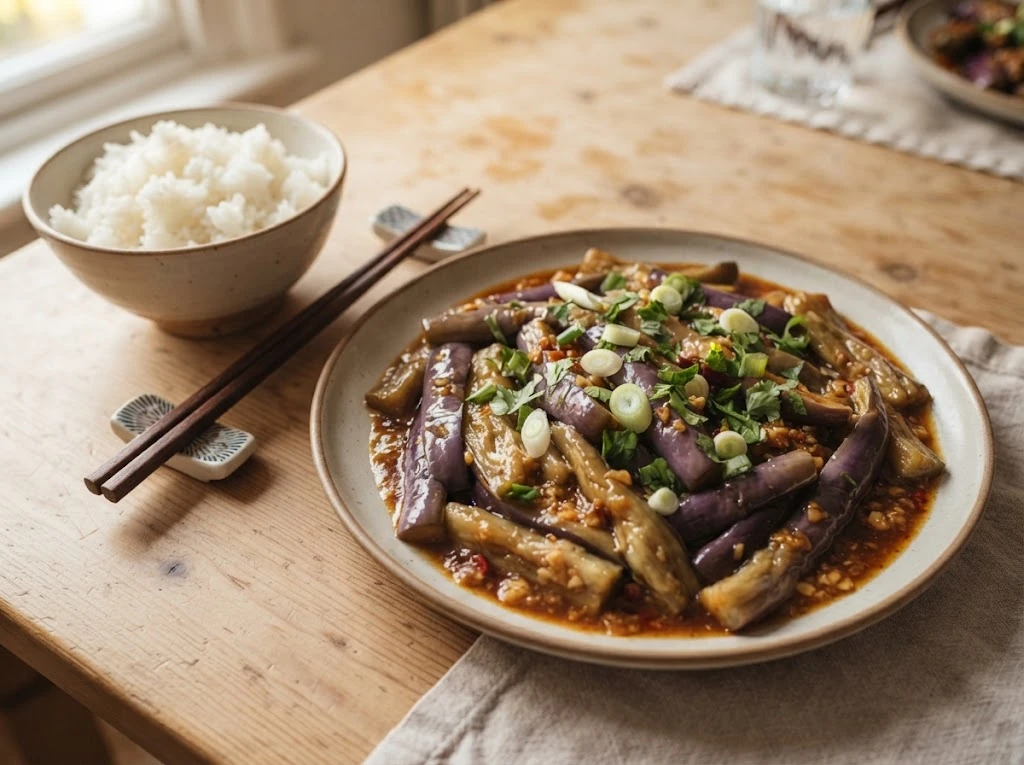
Order fish-fragrant eggplant in a Sichuan restaurant and you get soft, glossy pieces in a sauce that is sweet, sour, salty and a little spicy all at once. Then you look up how to make it and find two problems. The eggplant is deep-fried, which means a pan of hot oil in a small kitchen. And plenty of recipes that call themselves “easy” list more than fifteen ingredients.
This Chinese eggplant recipe fixes both. The eggplant is steamed instead of fried, so it goes soft without drinking up half a bottle of oil. The ingredient list is cut down to what actually makes the flavor, and everything else is marked as optional. And in case you wonder about the name, there is no fish in it. “Fish-fragrant” refers to a sauce Sichuan cooks traditionally used for fish, and the dish borrowed it.
Ingredients you really need
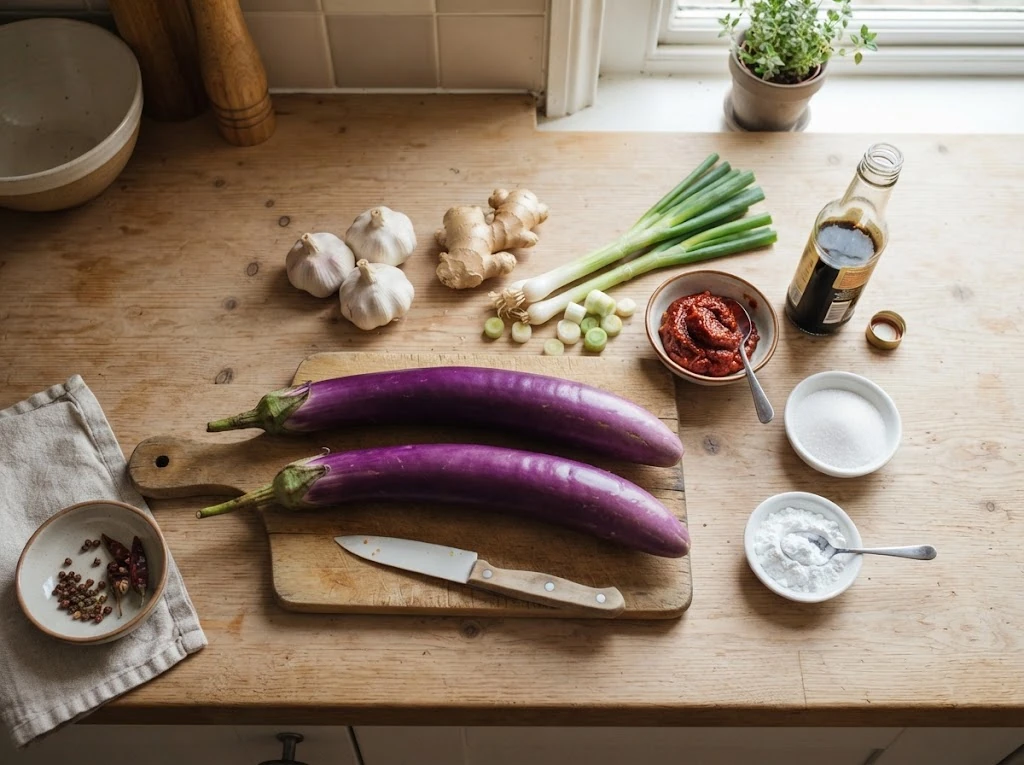
For the eggplant
- 400 g eggplant, about 2 long Chinese eggplants or 1 large regular eggplant
- 30 ml neutral oil, such as sunflower (2 tablespoons)
- 15 g garlic, about 3 cloves, finely chopped
- 10 g fresh ginger, finely chopped
- 30 g spring onion, about 2 stalks, white and green parts kept separate
- 15 g doubanjiang, the Sichuan chilli bean paste (1 tablespoon)
For the sauce
- 15 ml light soy sauce (1 tablespoon)
- 15 ml rice vinegar (1 tablespoon)
- 10 g sugar (2 teaspoons)
- 5 g cornflour (1½ teaspoons)
- 60 ml water
No salt. Doubanjiang and soy sauce are both salty already, so taste at the end before adding any.
Doubanjiang is the one ingredient you cannot swap. It is a fermented paste of broad beans and chillies, and it is where the deep red color and most of the flavor come from. You can read more about how doubanjiang is made. Asian supermarkets sell it in jars for around three euros, and a 500 g jar lasts for months in the fridge.
Ingredients that are nice to have
- Minced pork, 100 g. This is how many Sichuan families make it. It turns a side dish into a main course. Fry it before the doubanjiang (see step 4). Leave it out and the dish is fully vegetarian. This is how many Sichuan families make this Chinese eggplant recipe.
- Chinkiang black vinegar, 15 ml, instead of rice vinegar. It is darker, maltier and a little sweet, and it gives the sauce more depth. Rice vinegar is sharper but works well. Chinkiang vinegar is also sold in most Asian supermarkets.
- Shaoxing rice wine, 15 ml. Add it to the sauce. It rounds off the flavor, but you will not miss it if you don’t have any.
- 1 fresh red chilli, about 5 g, sliced. Only if you want more heat than the doubanjiang gives you.
- Toasted sesame oil, 3 ml (½ teaspoon). Drizzle it over at the very end for a nutty smell.
Tools you really need
- A pot with a lid. To steam, fill it with 2 cm of water, put an upside-down heatproof bowl in it, and rest a plate on the bowl. That is a steamer.
- A frying pan, about 28 cm. Everything is stir-fried in it for less than five minutes, so any pan works.
- A small bowl for mixing the sauce, and a sharp knife.
Tools that are nice to have
- A folding steamer basket. It is steadier than the plate-on-a-bowl trick, and the eggplant steams more evenly because the steam comes from all sides. It costs about five euros. It is one of the tools on our list of 10 most underrated kitchen tools.
- A mini food processor. Garlic and ginger chopped fine in ten seconds, without your hands smelling of garlic for two days.
- A wok. It gives a little more smoky flavor over high heat. For a dish that spends three minutes in the pan, a normal frying pan does the job.
How to make this Chinese eggplant recipe
- Mix the sauce first: 15 ml soy sauce, 15 ml vinegar, 10 g sugar, 5 g cornflour and 60 ml water in a small bowl. Keep it next to the hob. Once the pan is hot, things move fast.
- Cut the 400 g eggplant into strips about 8 cm long and 2 cm thick. Do this just before steaming, because cut eggplant turns brown within minutes.
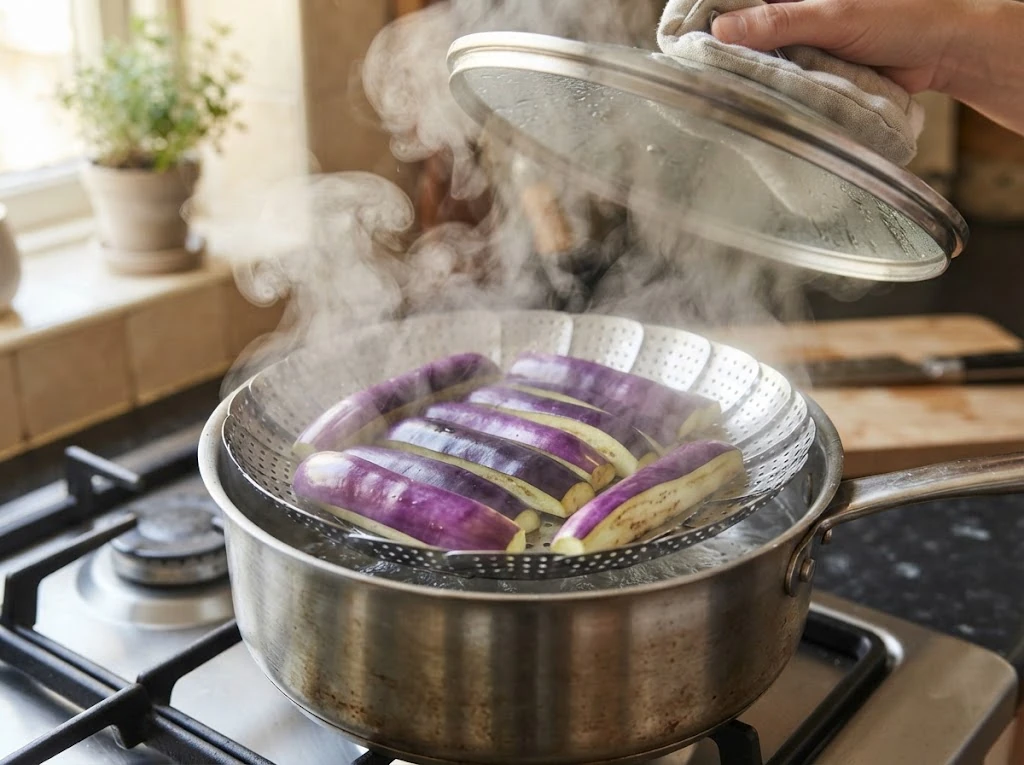
- Bring 2 cm of water to the boil in the pot. Lay the eggplant on the plate or in the steamer basket, skin side up, and cover. Steam for 8 to 10 minutes, until a chopstick slides through the thickest piece without any resistance. Pour off any water that has collected on the plate.
- Heat 30 ml oil in the frying pan over low heat. If you are using the 100 g minced pork, fry it over medium heat for 3 minutes until it is no longer pink, then turn the heat down. Add 15 g doubanjiang and stir for 30 seconds, until the oil turns red.
- Add the 15 g garlic, 10 g ginger and the white part of the spring onion. Stir for another 30 seconds, until it smells strongly of garlic.
- Turn the heat to medium-high. Add the steamed eggplant, stir the sauce once more (the cornflour sinks to the bottom) and pour it in. Toss gently for 1 to 2 minutes, until the sauce thickens and turns glossy.
- Scatter the green part of the spring onion on top and serve straight away with rice.
Why this Chinese eggplant recipe steams instead of deep-frying
Eggplant is basically a sponge. Its flesh is full of tiny air pockets, and when raw eggplant goes into hot oil, those pockets fill up with oil before the eggplant has had time to soften. That is why a restaurant Chinese eggplant recipe deep-fries it quickly at very high heat, and why home cooks who try it in a frying pan end up adding more and more oil to a pan that keeps going dry.
Steam fills those same air pockets with water instead. The eggplant collapses into that soft, silky texture in ten minutes and absorbs no fat at all. When it goes into the sauce afterwards, it soaks up the sauce instead of oil. This recipe uses 30 ml of oil for the whole dish. A deep-fried version easily ends up with several times that inside the eggplant.
Steaming the skin side up also helps the purple color stay bright, instead of turning a dull brown.
Cooking tips
Keep the heat low for the doubanjiang. It contains chilli and it burns within seconds over high heat. Burnt doubanjiang tastes bitter, and there is no way to fix it except starting again.
Don’t over-steam. At 12 minutes or more the eggplant starts falling apart in the pan. It should hold its shape while you steam it, and only go fully soft once it hits the sauce.
If the sauce is too thin, keep tossing over medium-high heat for another 30 seconds. The cornflour needs a proper boil to thicken.
If the sauce is too thick or sticky, add 15 ml of water and toss again.
If it tastes too salty, add another 5 g of sugar and 5 ml of vinegar. Sweet and sour balance out salt better than water does.
Cook the rice first. This whole Chinese eggplant recipe takes about 25 minutes, and most of that is steaming. Start 150 g of rice for two people at the very beginning, and it will be done at the same time. A rice cooker makes this completely hands-off, which is why it is number ten on our underrated kitchen tools list.
Once you have a jar of doubanjiang in the fridge, this Chinese eggplant recipe becomes a weeknight dinner, not a weekend project.
Looking for another one-pan dinner from a different corner of the world? Try our seafood paella recipe, made in a normal frying pan too. Or, if you want to stay on the stovetop for something quicker, our spaghetti carbonara recipe is on the table in 20 minutes. Tried this one? Leave a comment and tell us how it went!