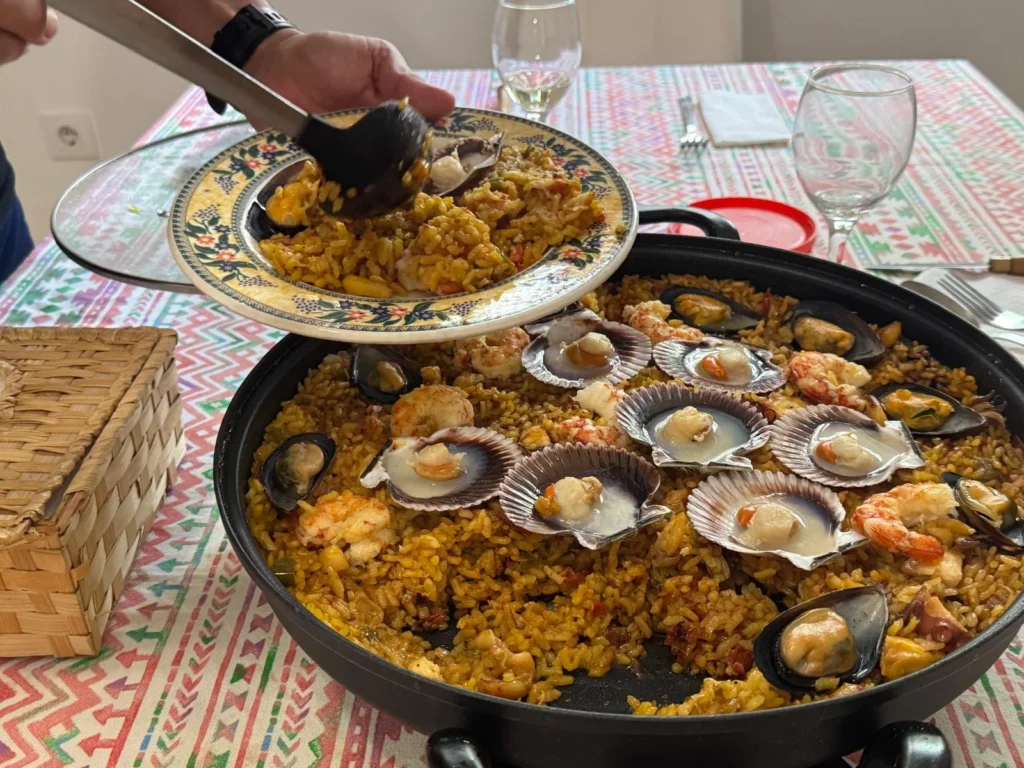
Paella looks like a dish you need special equipment for. But actually, you don’t! This seafood paella recipe is the version we make at home, in an ordinary pan, with whatever the fish counter had that day. It won’t be identical to one cooked over a wood fire in Valencia, but it gets close enough for you to try and enjoy at home. Now let’s get started!
Ingredients you really need
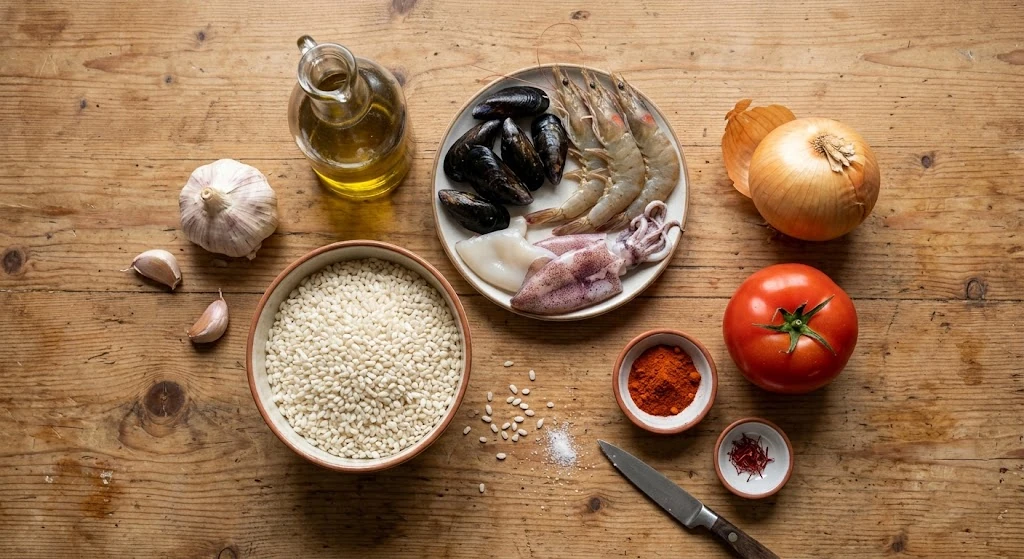
- 500 g seafood in total. We used 250 g mussels, 150 g raw prawns and 100 g squid rings.
- 200 g short-grain rice
- 600 ml hot fish or seafood stock, plus 100 ml extra in case the pan dries out
- 40 ml olive oil (about 3 tablespoons)
- 1 small onion, about 100 g, finely chopped
- 2 garlic cloves, about 10 g, finely chopped
- 1 ripe tomato, about 150 g, grated
- 3 g sweet paprika (1 teaspoon)
- 3 g salt (½ teaspoon), less if your stock is already salty
Ingredients that are nice to have
- Saffron, 0.1 g (a pinch of about 15 threads). It gives paella its color and a mild, slightly floral perfume. Without it the rice is paler and plainer, but still good. 1 g of turmeric (a small pinch) will fix the color and not the flavor, so use it only if you don’t mind the difference. If you do buy saffron, a 0.5 g tube is enough for five paellas.
- Bomba or Calasparra rice, 200 g. Spanish paella rice absorbs about a third more stock than normal rice and is much harder to overcook, which matters if this is your first attempt. If you use it, increase the stock to 750 ml. Both varieties come from protected growing regions in Spain, which is why they cost more than a supermarket short-grain. If you could only find short-grain rice it also works, but you need to keep an eye on it. Do not use long-grain or basmati, and do not use risotto rice, which is designed to go creamy.
- Scallops in the shell, 4 pieces (about 120 g). Purely for looks, and they look very good.
- White wine 50 ml, half a red pepper (about 80 g), frozen peas 50 g, 1 lemon cut into wedges. Each adds something. None of them decides whether the dish works.

Tools you really need
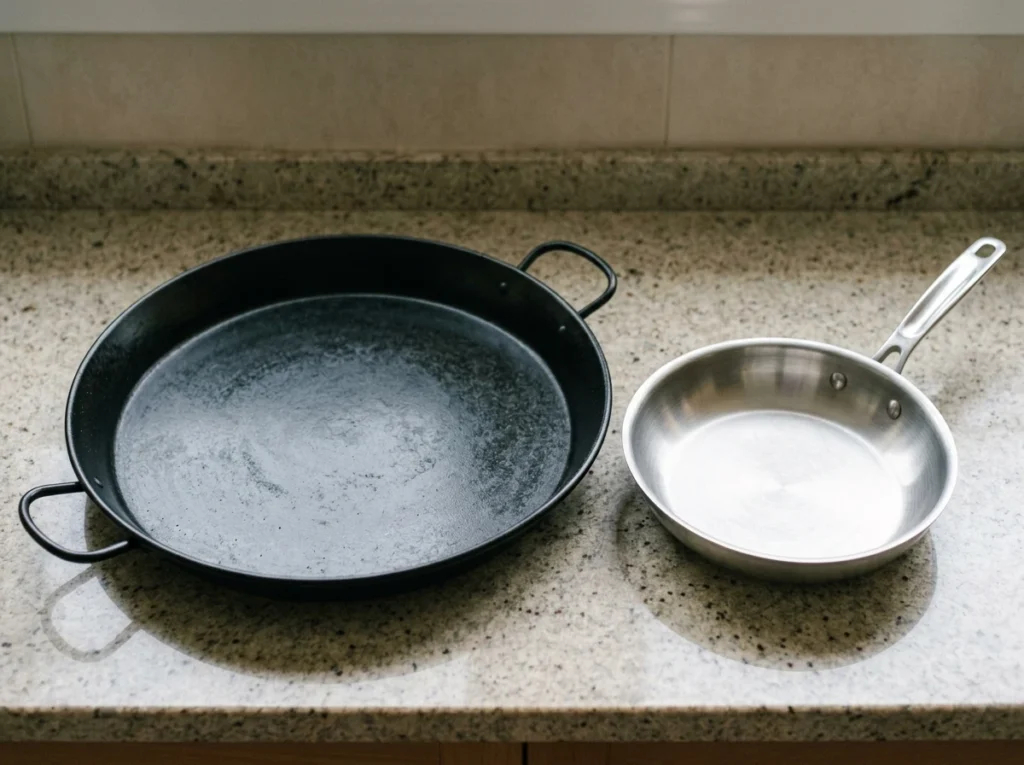
- The widest, shallowest pan you own. This is the one thing that genuinely matters. Paella is not a deep dish. The rice should sit no more than two fingers deep, because it cooks by absorbing stock from below rather than by being stirred. A 28 cm frying pan feeds two people properly, which is what this recipe is written for. For four people, double everything and use a 36 cm pan or two 28 cm pans side by side. Anything deeper turns into a rice stew, which is nice but is not paella.
- A small pot for heating the stock, and a spoon.
Tools that are nice to have
- A real paella pan. It is wider and shallower than a frying pan, so the rice layer is thinner and the bottom crisps more evenly. If you cook paella more than a few times a year it is worth it. Check which type your hob takes: a thin carbon steel pan works badly on induction, and on a gas ring a pan wider than the burner will cook unevenly in the middle.
- A lid. It will be useful if your hob runs cool and the rice on top stays hard.
- A mortar and pestle. Grinds saffron far more evenly than your fingers, which means the color spreads through the whole pan instead of sitting in streaks. It is one of the tools on our list of 10 most underrated kitchen tools.
How to make it
- Heat 600 ml of stock in a small pot and drop the saffron in. Keep it at a gentle boil. It must be boiling when it goes into the rice.
- Heat 40 ml of olive oil in the frying pan over medium-high heat. Fry the 150 g of prawns and 100 g of squid for about a minute, then take them out. They will finish cooking later and you don’t want them rubbery.
- Turn the heat to medium. Cook the 100 g of onion and 10 g of garlic in the same oil for about 5 minutes, until soft. Add the 150 g of grated tomato and 3 g of paprika and cook for another 5 minutes, until it is thick and dark.
- Add the 200 g of rice and stir it through the oil for a minute. Pour in the boiling stock, add 3 g of salt and shake the pan once so the rice lies flat.
- Stop stirring. Simmer on medium heat for about 18 minutes without touching it.
- For the last 5 minutes, push the 250 g of mussels into the rice with the hinge facing down and lay the prawns and squid on top. The mussels open in the steam. Take the pan off the heat, cover it with a clean tea towel and let it rest for 5 minutes before serving.
Useful tips:
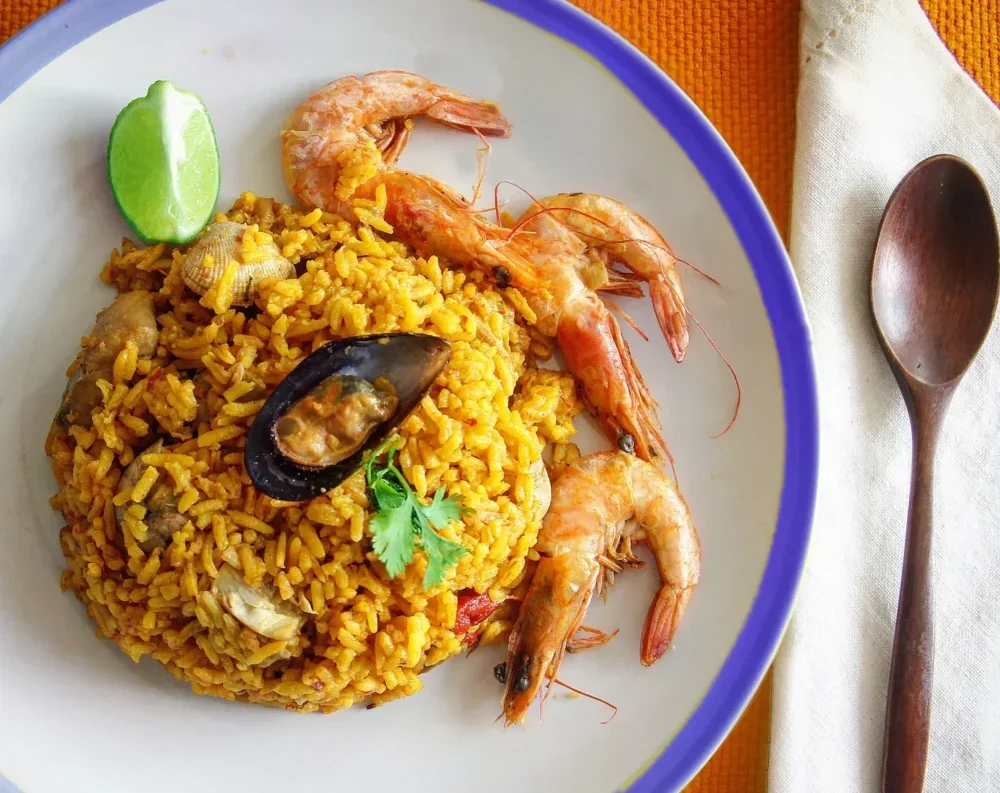
- Don’t stir in step 5. This is the one that decides whether this works. Stirring releases starch and released starch gives you risotto. Left alone, the bottom layer of rice sticks to the pan and caramelizes into socarrat, the crisp golden crust that people at the table quietly compete for.
- The rice is still hard and the pan is dry. Pour 50 ml of the extra boiling stock around the edges, not in the middle, and give it another 3 to 4 minutes. Cold water stops the cooking, so keep the stock hot.
- The rice is cooked but soupy. Too much stock, or the heat was too low. Turn it up and let the rest evaporate uncovered.
- Everything stuck and it tastes burnt. The heat was too high for too long, or the pan is thin in the middle. Next time use a heavier pan or move it around the ring.
- The seafood is tough. It went in too early. Mussels and prawns need five minutes, not twenty.
Is it worth making your own stock?
If you buy prawns with the heads on, you already have most of a stock. Fry the heads from your 150 g of prawns in 10 ml of oil for 2 minutes, press them with a spoon, add 750 ml of water and simmer for fifteen minutes. Strain it and you will have roughly the 600 to 700 ml you need. It takes almost no effort and the difference is bigger than the difference saffron makes.
If you are using shop-bought stock, fish stock is better than chicken, and low-salt is better because the rice concentrates everything.
How to serve with it
Very little. Lemon wedges, bread, and aioli if you have it. Paella is already a full meal, and in Spain it is usually lunch rather than dinner. A green salad afterwards is the most it needs.
Remember there is no single fixed paella recipe in this world. You can also replace seafood with chicken or pork or any other ingredients you like. Just explore the supermarket downstairs and keep trying. Maybe one day you will invent an exclusive one of your own!
Want to try a classic Italian pasta? Check our spaghetti carbonara recipe. Happy cooking!