Carbonara has five ingredients and the internet argues about all of them. Guanciale or bacon. Pecorino or parmesan. Cream or no cream. Whole eggs or yolks. Read enough comment sections and you start to think you need a flight to Rome before you are allowed to cook it.
You don’t. This spaghetti carbonara recipe uses what a normal supermarket sells, and tells you where the “proper” version really makes a difference and where it doesn’t. The one thing that genuinely matters is not an ingredient at all. It is getting the eggs off the heat at the right moment, and that part is explained step by step below.
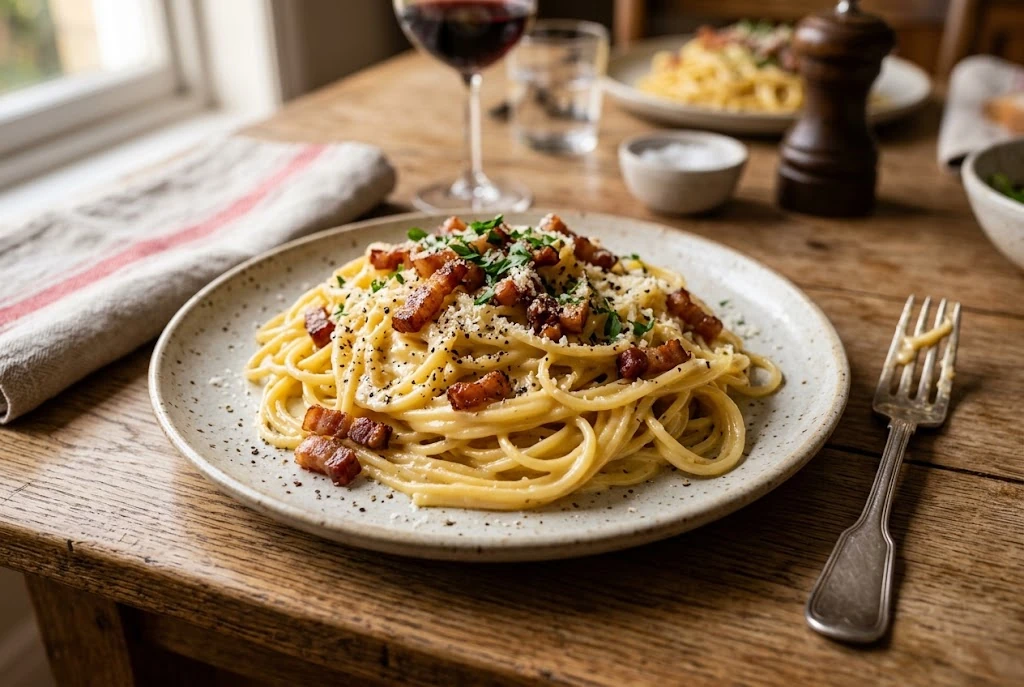
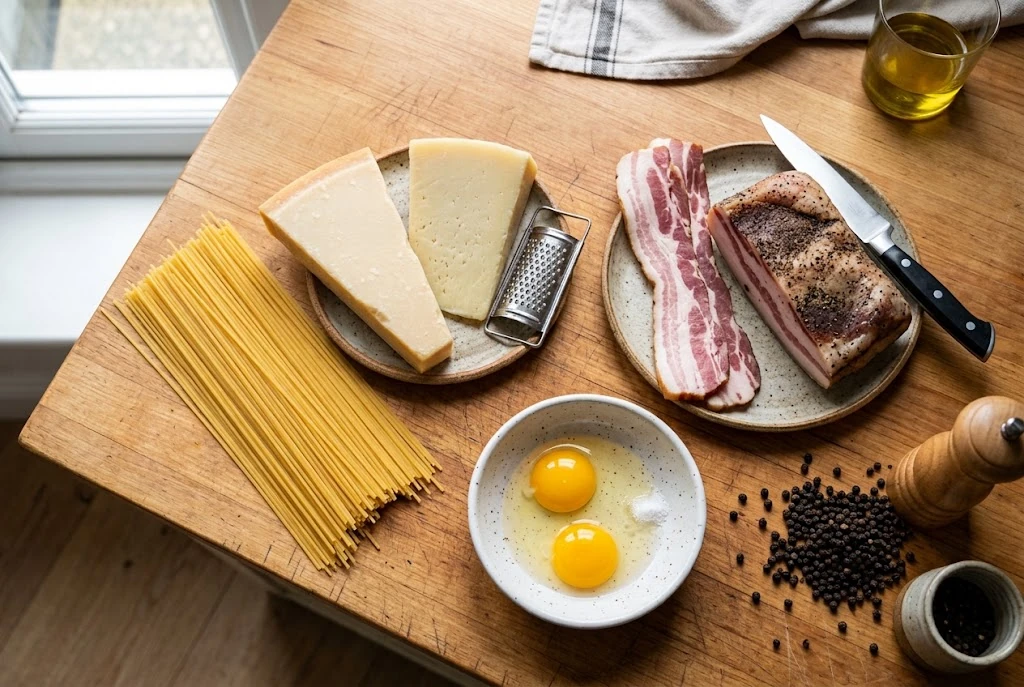
Ingredients you really need
- 200 g dried spaghetti
- 100 g smoked bacon or pancetta, cut into 1 cm strips
- 1 whole egg plus 2 egg yolks (about 100 g in total)
- 50 g parmesan, finely grated, plus 10 g extra for serving
- 2 g freshly ground black pepper (about 1 teaspoon)
- 2 litres of water with 12 g of salt for the pasta
No oil and no butter. The fat from the pork is enough.
The salt for the pasta water is lower than most recipes use, because the pork and the cheese are both salty already. Taste the sauce at the end before you add any more.
Ingredients that are nice to have
- Guanciale, 100 g, instead of bacon. This is cured pork cheek and it is what Romans use. It has more fat than bacon and that fat has a sweeter, deeper flavor that ends up in the sauce. It is also not smoked, so the dish tastes cleaner. If your supermarket has it, buy it. If it doesn’t, bacon gets you most of the way there. You can read more about how guanciale is made if you are curious why it costs more.
- Pecorino Romano, 50 g, instead of parmesan. Pecorino is made from sheep’s milk and is saltier and sharper. The traditional recipe uses it, and you will notice the difference if you eat the two side by side. On its own, a carbonara made with parmesan is still very good. Some people use 25 g of each, which is a sensible middle ground.
- One extra egg yolk. It makes the sauce richer and more golden. Not necessary, but nice if you have one left over.
What you really do not need: cream. This is not about being authentic. When the eggs and cheese are handled properly they turn into a sauce that is already creamy. Cream is usually added to hide eggs that have scrambled. Fix the technique and there is nothing to hide.
Tools you really need
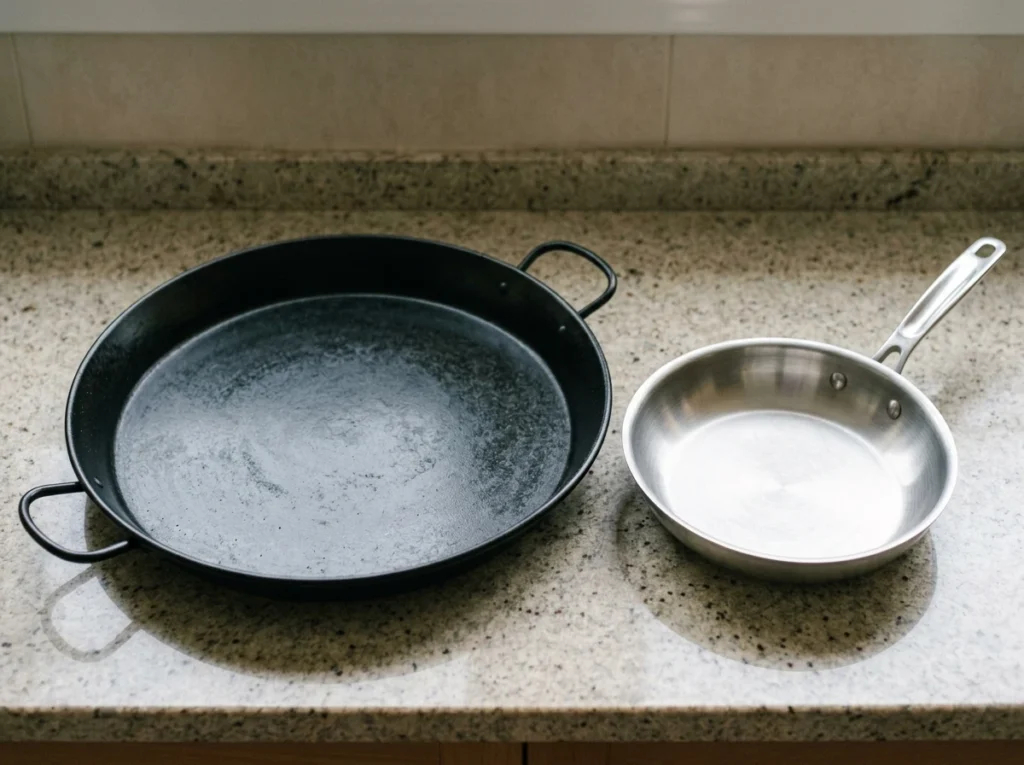
- A large pot. At least 3 litres, so the 2 litres of water and 200 g of pasta have room to move.
- A frying pan big enough to toss the pasta in. A 28 cm pan is right for two portions. The pasta finishes in this pan, not in the pot.
- A bowl and a fork for mixing the eggs and cheese.
- A grater. The cheese needs to be fine, not in thick shreds, otherwise it clumps instead of melting into the sauce.
Tools that are nice to have
- A pasta fork. It lets you lift the spaghetti straight from the pot into the frying pan, with a little of the cooking water still clinging to it. That water helps the sauce come together. It is one of the tools on our list of underrated kitchen tools.
- A fine rasp grater. It turns hard cheese into something close to powder, which melts almost instantly. A normal box grater on the finest side works too, it just takes longer.
- A kitchen scale. Carbonara has so few ingredients that the ratios matter. 50 g of cheese to about 100 g of egg is what gives you a sauce instead of a paste or a soup.
Not sure what tool you would use it repeatedly and what you would only use it for one time and put away? Check our 10 most underrated kitchen tools and see what tools are worth buying not just for only one recipe!
How to make it
- Bring 2 litres of water to the boil in the large pot and add 12 g of salt.
- While it heats, mix the whole egg, the 2 yolks, the 50 g of grated cheese and 2 g of black pepper in a bowl with a fork. It should look like a thick yellow paste. Leave it next to the hob.
- Put the 100 g of bacon in the cold frying pan and turn the heat to medium. Cook it for about 6 to 8 minutes, until the fat has melted out and the edges are golden. Turn the heat off and leave the bacon and fat in the pan.
- Add the 200 g of spaghetti to the boiling water and cook it for 1 minute less than the packet says. Before draining, scoop out 150 ml of the cooking water and keep it.
- Move the spaghetti into the frying pan with the bacon, using a pasta fork or tongs. Add 50 ml of the cooking water and toss everything together for 30 seconds. The pan must be off the heat.
- Wait about 30 seconds so the pan cools slightly, then pour the egg mixture over the pasta. Toss and stir quickly for 1 to 2 minutes. Add more of the cooking water, 1 tablespoon (15 ml) at a time, until the sauce is glossy and coats every strand.
- Serve straight away with the 10 g of extra cheese and a little more pepper on top.
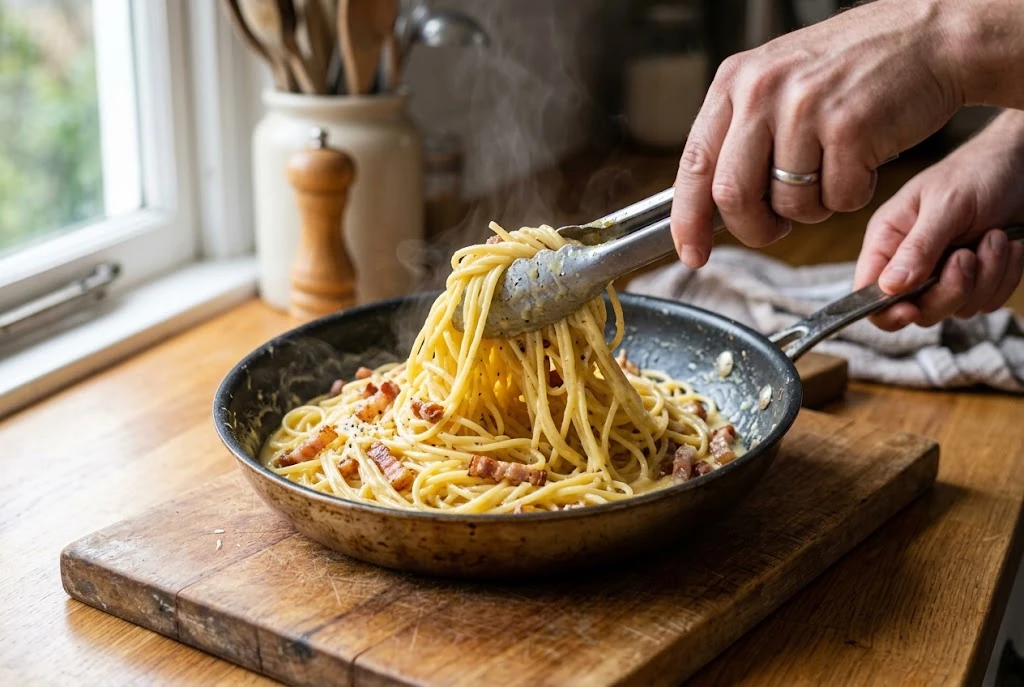
Why the pan has to be off the heat
This is the step that decides everything. Egg starts to thicken at around 65°C and turns into scrambled egg a few degrees above that. A frying pan on a hob is far hotter than that.
With the pan off the heat, the hot pasta and the warm fat cook the eggs just enough to thicken them into a sauce. The cooking water loosens it and the starch in the water helps it cling. If you leave the pan on the hob, you get pasta with bits of omelette in it.
Wait 30 seconds after turning the heat off, then add the eggs. If you want to be sure, hold your hand over the pan. It should feel warm, not hot.
Cooking Tips
Start the pork in a cold pan. It is in step 3 and it is easy to skip. A cold pan lets the fat melt out slowly, which is where most of the flavour of this dish comes from. Drop bacon into an already hot pan and the outside seizes before the fat has a chance to render.
Keep more pasta water than you think you need. 150 ml looks like far too much. You will use between 50 and 100 ml, and the day you only saved a splash is the day the sauce seizes up and there is nothing left to loosen it with.
Warm the plates. Carbonara goes from silky to stiff in about a minute on a cold plate. Run two plates under the hot tap while the pasta cooks and dry them. It sounds fussy and it makes more difference than the choice between pecorino and parmesan.
Take the eggs out of the fridge when you start. Cold eggs hitting hot pasta thicken unevenly, so you get a sauce with lumps in an otherwise smooth pan.
If it starts to scramble, act immediately. The moment you see anything solid forming, throw in 2 tablespoons (30 ml) of pasta water and keep tossing. The water drops the temperature straight away and stops it going further. It will not be as smooth as it could have been, but it will still be a good plate of pasta.
If the sauce is thick and clumpy, add 15 ml of pasta water and toss hard for 30 seconds. Clumps are almost always cheese that was grated too coarsely, and water plus movement will still melt most of it.
If the sauce is runny, put the pan back on the lowest heat for 10 to 15 seconds while tossing, then take it off again. Short bursts only. Two of these are usually enough.
If it is too salty, whisk one extra yolk with 15 ml of pasta water and stir it through. It dilutes the salt and makes the sauce richer at the same time. Next time cut the salt in the pasta water to 8 g.
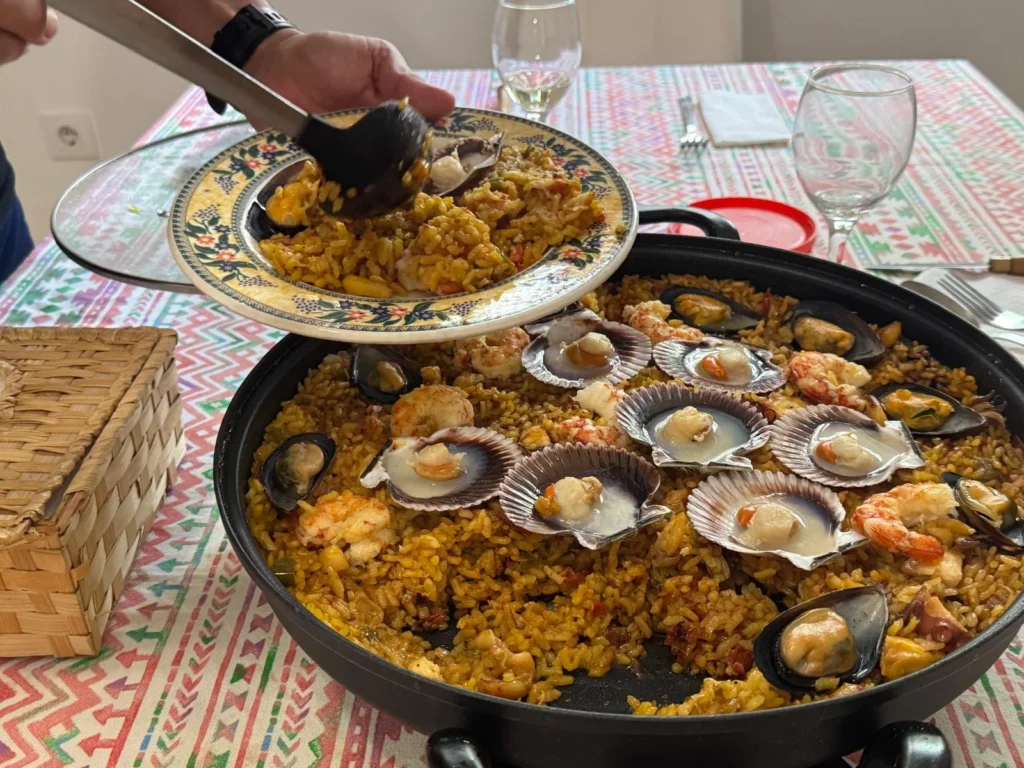
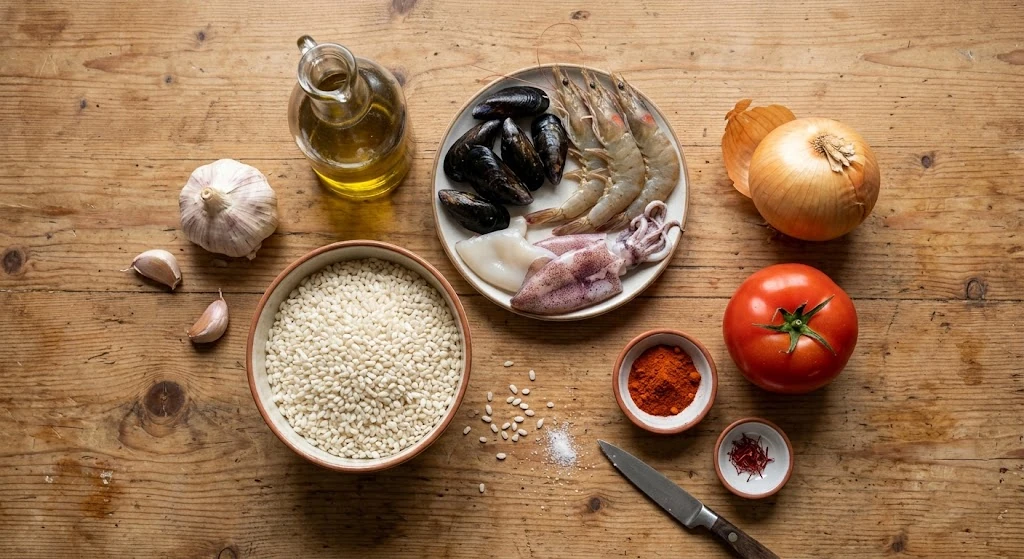
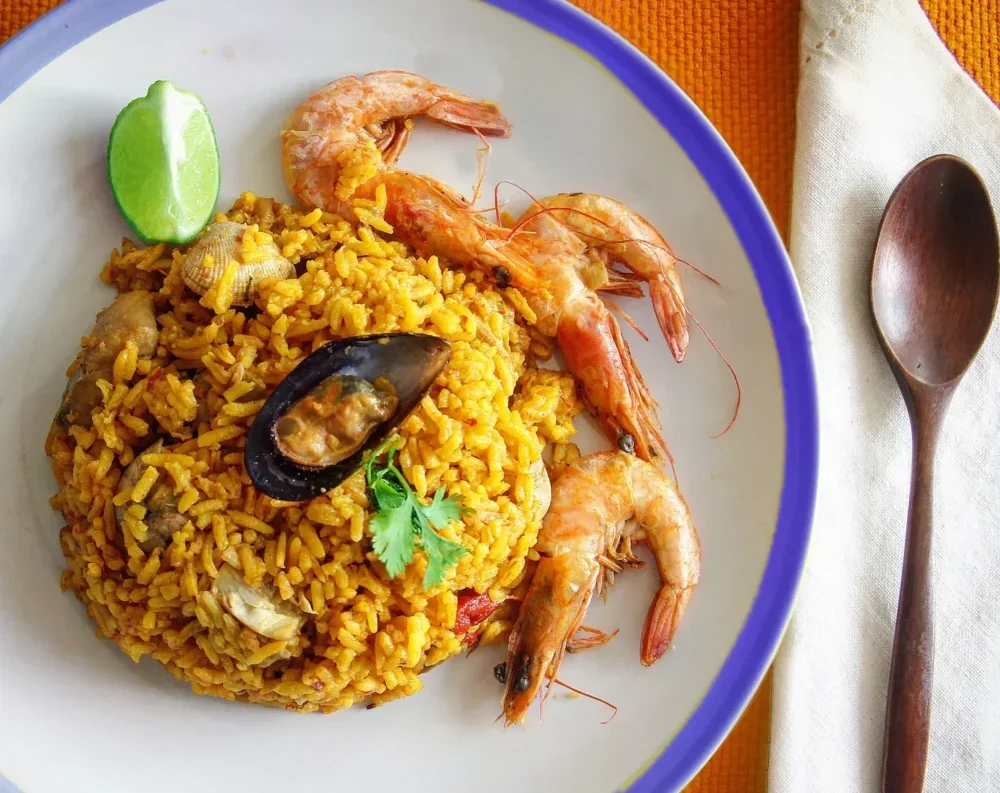
Interested in more recipes? Check our seafood paella recipe. Anything else you are interested in cooking? Leave your comments here!